

Someone Had To — Episode 03
The Rickshaw Puller Who Kept Building Schools
He had been denied an education by poverty. He did not want the same thing to happen to his children — or to the children around him.
Karimganj, Assam
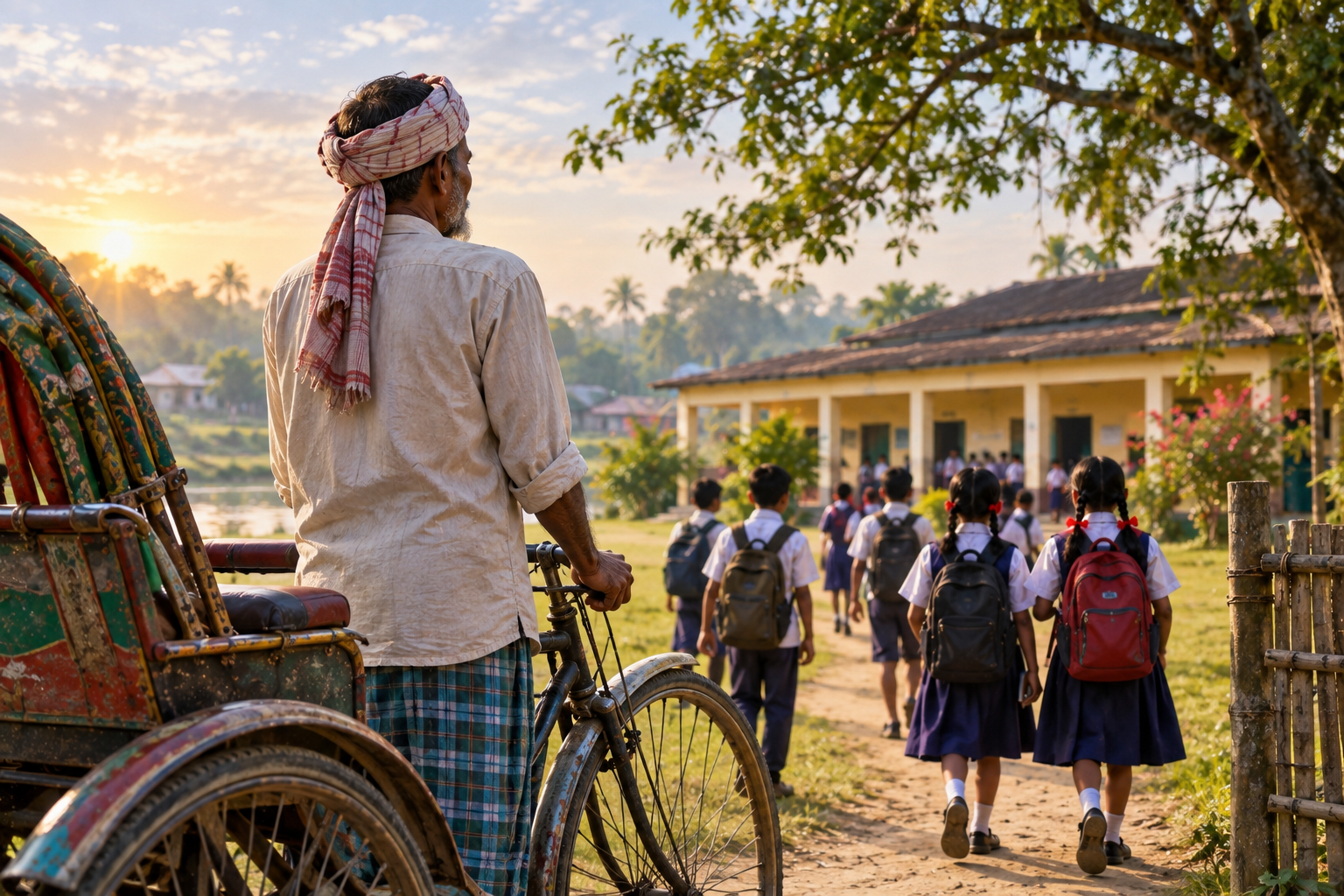
There was a time when Ahmed Ali spent his days carrying other people’s children to school. He was a rickshaw puller in Karimganj, Assam, and he had not been able to continue his own education because his family was poor; school was something he had seen from a distance, a path that other children could take but he could not. Then he began thinking about his own child. As he carried schoolchildren in his rickshaw, he watched them go with books and bags, and began to worry that his child might grow up without an education too. He knew what poverty could take away from a child, because it had already taken something from him. But instead of accepting that as fate, he decided to do something about it.
One School
In 1978, Ahmed Ali helped establish a school in his village. He gave land for it and contributed what he could from his earnings, and villagers came forward to help as well. According to accounts of those early days, Ali would pull his rickshaw during the day and work on the construction at night.1 The first school changed something: children who had little access to education now had a place to study, and a child no longer had to leave the village simply to begin learning. But Ali soon discovered another problem — a school could not solve everything if children had nowhere to go after completing the first few classes. So he did not stop at one school.
One Problem Led to Another
He helped establish more schools: first lower-primary schools, then middle schools, and eventually a high school. Over the years, his efforts resulted in nine schools in and around his community — three lower-primary schools, five middle or ME schools, and a high school that later became part of the formal government education system. The scale of the sacrifice is difficult to miss. Ali inherited about 36 bighas of land, and reports say that he gave away or sold around 32 bighas of it for educational purposes.1 He did not have a large organisation behind him, and he was not a wealthy industrialist. He was a rickshaw puller who kept using whatever he had — his land, his earnings, his labour and his time.
He Was Thinking About Girls Too
For Ahmed Ali, building schools was not only about increasing the number of classrooms; he was particularly concerned about girls. Boys, he observed, could sometimes travel farther to continue their education. For many girls, distance itself could become another barrier, and a school closer to home could therefore mean the difference between continuing education and leaving it altogether. Today, reports say that hundreds of girls study across the schools he helped establish.1 That is perhaps one of the quietest measures of what his decision accomplished.
He Solved One Barrier and Found Another
The pattern continued throughout his life: when one obstacle was removed, another became visible. Children could now attend school, but students completing Class X still had limited opportunities for higher education nearby, so Ali began thinking about a junior college. The goal may sound modest when written on paper. But for someone who had already given away most of his land and spent decades earning through physical labour, it meant starting another difficult journey. And he was still thinking about it.2
He Never Made Himself the Centre
There is another detail worth noticing in Ahmed Ali’s story: he did not appear interested in turning the schools into monuments to himself. Only one of them bears his name, and reports say it was named after him because villagers insisted. His attention remained on the children. Some of them eventually went on to higher education, some found employment, and some returned to their communities. For Ali, seeing former students build their own lives became a reward of its own.
Recognition Came Much Later
For decades, his work remained largely within the villages where the schools stood. Then, in 2018, Prime Minister Narendra Modi mentioned Ahmed Ali in Mann Ki Baat as an example of what ordinary citizens can accomplish through determination.3 Years later, in 2025, Ali was invited by the Government of India as a special guest to the Republic Day celebrations in New Delhi.1 The recognition was remarkable, but it came after the work, not before it. By then the important part of his story had already happened quietly: children had entered classrooms, girls had continued their education, teachers had found places to teach, and villages had acquired institutions that did not exist before.
Note
The distance between a child and a classroom
The most practical thing Ahmed Ali did was to make school closer. For a family with no money for transport, and particularly for a girl whose parents worry about a long walk, a few kilometres can decide whether education continues at all. Removing that distance did not require policy, funding or authority — it required land he already owned and labour he was already selling by the hour. The question his story leaves is narrow and answerable: what is the equivalent distance we could shorten for someone near us?
What Did Ahmed Ali Really Build?
It would be easy to say that Ahmed Ali built nine schools, but that is only the physical part of the story. He built access. He built a possibility for children whose families could not easily provide one, and a path for girls who might otherwise have had to stop studying because the next school was too far away. And perhaps most importantly, he demonstrated something simple: you do not always have to begin with everything you need. Sometimes you begin with what you have. Ahmed Ali had a rickshaw. He had some land. He had very little money. He had his own experience of being denied an education, and a fear that his child might face the same fate. That was enough to begin.
Someone Had To
Most social problems are much larger than one person, and education is certainly one of them. Ahmed Ali could not educate every child in Assam, remove poverty, or rebuild the entire education system. He simply saw a problem that was close enough for him to touch, and he acted. Perhaps that is where the idea of “Someone Had To” begins — not with extraordinary resources, not with a perfect plan, but with a person looking at a problem and refusing to say that it is not their responsibility. We may not have land. We may not have money. We may not be able to build a school. But perhaps we have something else: a little time, a skill, a connection, an idea, or simply the willingness to begin. Ahmed Ali began with what he had.
Someone had to. He did.
Notes
- Awaz–The Voice, “Assam’s Rickshaw Puller Ahmed Ali Who Built Schools Is Guest at R-Day,” 26 January 2025, on the land he donated, the nine schools, and the students enrolled in them. awazthevoice.in ↩
- Awaz–The Voice, “At 89, Rickshaw Puller Ahmed Ali Is Not Done with Building Schools,” June 2025. awazthevoice.in ↩
- Prime Minister Narendra Modi’s reference to Ahmed Ali in the 42nd edition of Mann Ki Baat, 2018, as reported at the time. varthabharati.in ↩
समवन हैड टू — एपिसोड 03
वह रिक्शा चालक जो स्कूल बनाता रहा
ग़रीबी ने उन्हें पढ़ने नहीं दिया। वे नहीं चाहते थे कि यही उनके बच्चों के साथ हो — या उनके आसपास के बच्चों के साथ।
करीमगंज, असम
एक वक़्त था जब अहमद अली अपने दिन दूसरों के बच्चों को स्कूल पहुंचाने में बिताते थे। वे असम के करीमगंज में रिक्शा चलाते थे, और परिवार की ग़रीबी के कारण अपनी पढ़ाई जारी नहीं रख पाए थे; स्कूल उनके लिए दूर से देखी गई एक चीज़ था — एक ऐसा रास्ता, जिस पर दूसरे बच्चे चल सकते थे, वे नहीं। फिर उन्होंने अपने बच्चे के बारे में सोचना शुरू किया। जब वे स्कूली बच्चों को अपने रिक्शे पर ले जाते और उन्हें किताबों और बस्तों के साथ जाते देखते, तो यह डर उनके मन में बैठने लगा कि कहीं उनका बच्चा भी बिना पढ़ाई के बड़ा न हो जाए। वे जानते थे कि ग़रीबी एक बच्चे से क्या छीन सकती है, क्योंकि वह उनसे पहले ही कुछ छीन चुकी थी। लेकिन इसे क़िस्मत मान लेने के बजाय, उन्होंने इस पर कुछ करने का फ़ैसला किया।
एक स्कूल
1978 में, अहमद अली ने अपने गांव में एक स्कूल खड़ा करने में मदद की। उन्होंने इसके लिए ज़मीन दी, अपनी कमाई से जो कुछ दे सकते थे दिया, और गांव वाले भी मदद के लिए आगे आए। उन शुरुआती दिनों के विवरण के अनुसार, अली दिन में रिक्शा चलाते और रात में निर्माण-कार्य में लगे रहते।1 पहले स्कूल ने कुछ बदल दिया: जिन बच्चों तक शिक्षा मुश्किल से पहुंचती थी, उन्हें पढ़ने की एक जगह मिल गई, और पढ़ाई शुरू करने के लिए किसी बच्चे को गांव छोड़ना ज़रूरी नहीं रहा। लेकिन अली को जल्द ही एक और समस्या दिखी — अगर बच्चों के पास शुरुआती कक्षाओं के बाद जाने के लिए कोई जगह न हो, तो एक स्कूल सब कुछ हल नहीं कर सकता। इसलिए वे एक स्कूल पर नहीं रुके।
एक समस्या से दूसरी समस्या
उन्होंने और स्कूल खड़े करने में मदद की — पहले निम्न-प्राथमिक स्कूल, फिर मध्य विद्यालय, और आख़िर में एक हाई स्कूल। बरसों में, उनकी कोशिशों से उनके समुदाय और आसपास नौ स्कूल बने: तीन निम्न-प्राथमिक स्कूल, पांच मध्य (एमई) स्कूल, और एक हाई स्कूल, जो बाद में औपचारिक सरकारी शिक्षा व्यवस्था का हिस्सा बन गया। इस त्याग का पैमाना नज़रअंदाज़ करना मुश्किल है। अली को क़रीब 36 बीघा ज़मीन विरासत में मिली थी, और रिपोर्टों के अनुसार उन्होंने इसमें से क़रीब 32 बीघा शिक्षा के कामों के लिए दान कर दी या बेच दी।1 उनके पीछे कोई बड़ा संगठन नहीं था, और वे कोई धनी उद्योगपति नहीं थे। वे एक रिक्शा चालक थे, जो जो कुछ उनके पास था — ज़मीन, कमाई, मेहनत और समय — उसी का इस्तेमाल करते रहे।
वे लड़कियों के बारे में भी सोच रहे थे
अहमद अली के लिए स्कूल बनाना सिर्फ़ कक्षाओं की संख्या बढ़ाने का मामला नहीं था; उन्हें ख़ास तौर पर लड़कियों की चिंता थी। उन्होंने देखा कि लड़के कभी-कभी पढ़ाई जारी रखने के लिए दूर तक जा सकते थे। कई लड़कियों के लिए दूरी ख़ुद एक और रुकावट बन जाती थी, और घर के पास का स्कूल यह तय कर सकता था कि पढ़ाई जारी रहेगी या पूरी तरह छूट जाएगी। आज, रिपोर्टों के अनुसार उनके बनाए स्कूलों में सैकड़ों लड़कियां पढ़ती हैं।1 शायद यही उनके फ़ैसले की सबसे ख़ामोश कसौटी है।
एक रुकावट हटी, दूसरी दिखी
यह सिलसिला उनकी पूरी ज़िंदगी चलता रहा: जब एक रुकावट हटती, तो दूसरी सामने आ जाती। बच्चे अब स्कूल जा सकते थे, लेकिन दसवीं पूरी करने वाले छात्रों के लिए आसपास उच्च शिक्षा के मौक़े अब भी सीमित थे, इसलिए अली एक जूनियर कॉलेज के बारे में सोचने लगे। काग़ज़ पर यह लक्ष्य मामूली लग सकता है। लेकिन ऐसे इंसान के लिए, जो अपनी ज़्यादातर ज़मीन पहले ही दे चुका था और दशकों शारीरिक मेहनत से कमाता रहा था, इसका मतलब एक और कठिन सफ़र की शुरुआत थी। और वे इस पर सोचते रहे।2
उन्होंने ख़ुद को कभी केंद्र में नहीं रखा
अहमद अली की कहानी में एक और बात ध्यान देने लायक़ है: वे इन स्कूलों को अपनी यादगार बनाने में दिलचस्पी रखते नहीं दिखे। इनमें से सिर्फ़ एक स्कूल पर उनका नाम है, और रिपोर्टों के अनुसार वह भी इसलिए, क्योंकि गांव वालों ने ज़िद की। उनका ध्यान बच्चों पर बना रहा। उनमें से कुछ बच्चे आगे उच्च शिक्षा तक पहुंचे, कुछ को नौकरी मिली, और कुछ अपने समुदायों में लौट आए। अली के लिए, अपने पुराने छात्रों को अपनी ज़िंदगी बनाते देखना ही अपने आप में एक इनाम बन गया।
पहचान बहुत बाद में मिली
दशकों तक, उनका काम ज़्यादातर उन्हीं गांवों तक सीमित रहा जहां ये स्कूल खड़े थे। फिर, 2018 में, प्रधानमंत्री नरेंद्र मोदी ने मन की बात में अहमद अली का ज़िक्र किया — इस उदाहरण के तौर पर कि आम नागरिक अपने संकल्प से क्या कर सकते हैं।3 बरसों बाद, 2025 में, भारत सरकार ने उन्हें नई दिल्ली में गणतंत्र दिवस समारोह के लिए विशेष अतिथि के रूप में आमंत्रित किया।1 यह पहचान उल्लेखनीय थी, लेकिन यह काम के बाद आई, पहले नहीं। तब तक उनकी कहानी का अहम हिस्सा चुपचाप घट चुका था: बच्चे कक्षाओं तक पहुंच चुके थे, लड़कियों की पढ़ाई जारी रह चुकी थी, शिक्षकों को पढ़ाने की जगह मिल चुकी थी, और गांवों को ऐसी संस्थाएं मिल चुकी थीं जो पहले मौजूद नहीं थीं।
टिप्पणी
एक बच्चे और कक्षा के बीच की दूरी
अहमद अली ने जो सबसे व्यावहारिक काम किया, वह था स्कूल को पास ले आना। जिस परिवार के पास आने-जाने का ख़र्च नहीं है, और ख़ास तौर पर उस लड़की के लिए जिसके माता-पिता लंबे रास्ते को लेकर चिंतित रहते हैं, कुछ किलोमीटर की दूरी तय कर सकती है कि पढ़ाई जारी रहेगी या नहीं। इस दूरी को घटाने के लिए किसी नीति, फ़ंडिंग या अधिकार की ज़रूरत नहीं थी — इसके लिए वह ज़मीन चाहिए थी जो उनके पास पहले से थी, और वह मेहनत जो वे पहले ही घंटे के हिसाब से बेच रहे थे। उनकी कहानी जो सवाल छोड़ती है, वह छोटा और जवाब देने लायक़ है: हमारे आसपास किसी के लिए ऐसी कौन सी दूरी है, जिसे हम घटा सकते हैं?
अहमद अली ने असल में क्या बनाया?
यह कहना आसान होगा कि अहमद अली ने नौ स्कूल बनाए, लेकिन यह कहानी का सिर्फ़ भौतिक हिस्सा है। उन्होंने पहुंच बनाई। उन्होंने उन बच्चों के लिए एक संभावना बनाई, जिनके परिवार आसानी से यह नहीं दे सकते थे, और उन लड़कियों के लिए एक रास्ता, जिन्हें शायद इसलिए पढ़ाई छोड़नी पड़ती कि अगला स्कूल बहुत दूर था। और शायद सबसे अहम बात, उन्होंने एक सीधी बात दिखाई: शुरुआत करने के लिए हमेशा वह सब कुछ होना ज़रूरी नहीं, जिसकी ज़रूरत है। कभी-कभी आप वहीं से शुरू करते हैं, जो आपके पास है। अहमद अली के पास एक रिक्शा था। थोड़ी ज़मीन थी। पैसा बहुत कम था। उनके पास शिक्षा से वंचित रहने का अपना अनुभव था, और यह डर कि उनके बच्चे के साथ भी वही न हो। शुरुआत के लिए इतना काफ़ी था।
किसी को तो करना ही था
ज़्यादातर सामाजिक समस्याएं किसी एक इंसान से कहीं बड़ी होती हैं, और शिक्षा उनमें से एक है। अहमद अली असम के हर बच्चे को नहीं पढ़ा सकते थे, ग़रीबी नहीं मिटा सकते थे, या पूरी शिक्षा व्यवस्था नहीं बदल सकते थे। उन्होंने बस एक ऐसी समस्या देखी जो उनके हाथ की पहुंच में थी, और उन्होंने कुछ किया। शायद ‘किसी को तो करना ही था’ का ख़्याल यहीं से शुरू होता है — असाधारण साधनों से नहीं, किसी बेहतरीन योजना से नहीं, बल्कि एक ऐसे इंसान से जो किसी समस्या को देखता है और यह कहने से इनकार कर देता है कि ‘यह मेरी ज़िम्मेदारी नहीं है।’ शायद हमारे पास ज़मीन नहीं है। शायद पैसा नहीं है। शायद हम स्कूल नहीं बना सकते। लेकिन शायद हमारे पास कुछ और है: थोड़ा सा समय, कोई हुनर, कोई संपर्क, कोई विचार, या बस शुरुआत करने की इच्छा। अहमद अली ने वहीं से शुरुआत की, जो उनके पास था।
किसी को तो करना ही था। उन्होंने किया।
टिप्पणियां
- आवाज़–द वॉयस, “असम्स रिक्शा पुलर अहमद अली हू बिल्ट स्कूल्स इज़ गेस्ट ऐट आर-डे,” 26 जनवरी 2025 — दान की गई ज़मीन, नौ स्कूलों और उनमें पढ़ने वाले छात्रों के बारे में। awazthevoice.in ↩
- आवाज़–द वॉयस, “ऐट 89, रिक्शा पुलर अहमद अली इज़ नॉट डन विद बिल्डिंग स्कूल्स,” जून 2025। awazthevoice.in ↩
- 2018 में मन की बात के 42वें संस्करण में प्रधानमंत्री नरेंद्र मोदी द्वारा अहमद अली का उल्लेख, तत्कालीन रिपोर्टों के अनुसार। varthabharati.in ↩