

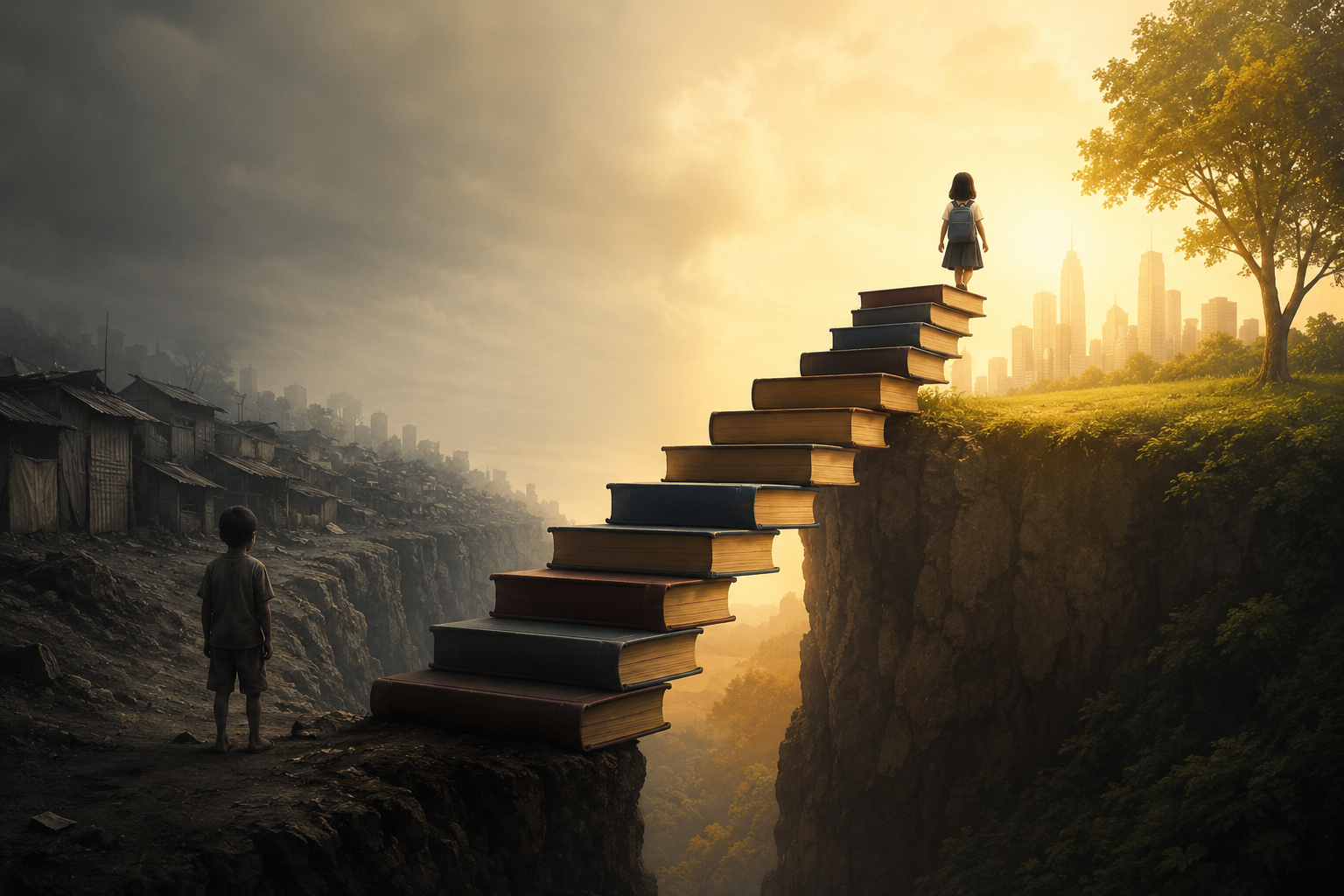
The Burden of an Unbuilt Generation
Every successful generation stands on the achievements of those who came before it. When one generation neglects—or is itself neglected in—education, innovation, and the building of strong institutions, the next generation inherits greater challenges and may be pushed toward failure.
Education is often discussed as an investment in an individual child. In reality, it is an investment in generations yet to come.
“A child inherits far more than a surname. They inherit the educational foundations their parents were able—or unable—to build.”
Inheritance Beyond Wealth
A child does not inherit only genes or family traditions. They inherit language, habits, knowledge, confidence, networks, opportunities, and aspirations. These are the invisible assets that parents pass on to their children. The stronger these assets, the stronger the foundation upon which the next generation can build.
For families that have enjoyed quality education over several generations, each generation begins where the previous one ended. Parents who can read help their children read. Parents who understand mathematics help with homework. Parents with stable employment invest in books, technology, and enriching experiences. Progress compounds across generations.
Marginalized communities often experience the opposite.
The Weight of Historical Neglect
When a community has been denied quality education for decades, parents may never have had the opportunity to develop literacy, critical thinking, professional skills, or financial security. This is not a failure of effort alone; it is frequently the consequence of unequal access, historical disadvantage, poor schooling, discrimination, or persistent poverty.
As a result, they have fewer educational resources to pass on. Their children begin life with fewer advantages. Even when they work extraordinarily hard, they are often building the foundation that previous generations in more privileged communities had already built. Instead of climbing higher, they must first construct the staircase itself.
“Some children climb stairs built by previous generations. Others must first construct the staircase itself.”
If this cycle continues, each generation inherits not accumulated strength but accumulated disadvantage.
Educational Justice Across Generations
This is why educational justice cannot focus only on today’s learners. It must focus on breaking intergenerational cycles.
The goal is not simply to help one child pass an examination. The goal is to enable that child to become the first generation capable of passing knowledge, confidence, opportunity, and hope to the next. A well-educated child becomes an educated parent. An educated parent creates a richer learning environment at home. That environment shapes another generation of learners, who begin life from a higher starting point than their parents did.
“The true success of education is therefore measured not only by what a child achieves today but by what that child will be able to pass on tomorrow.”
Every child from a marginalized community who receives a meaningful education has the potential to alter the trajectory of an entire family. Every educated first-generation learner can become the foundation upon which future generations stand.
From Equity to Nation Building
This is why society must invest intentionally in those who have historically been left behind. Equity is not charity. It is nation-building. When we strengthen the educational foundations of the most marginalized, we are not merely changing individual lives—we are creating stronger generations.
A nation’s future is determined not by the children who already have every advantage, but by whether it enables those who inherited the least to build enough for those who come after them.
Education is not only about preparing children for the future. It is about ensuring that every generation leaves behind a stronger inheritance than the one it received.